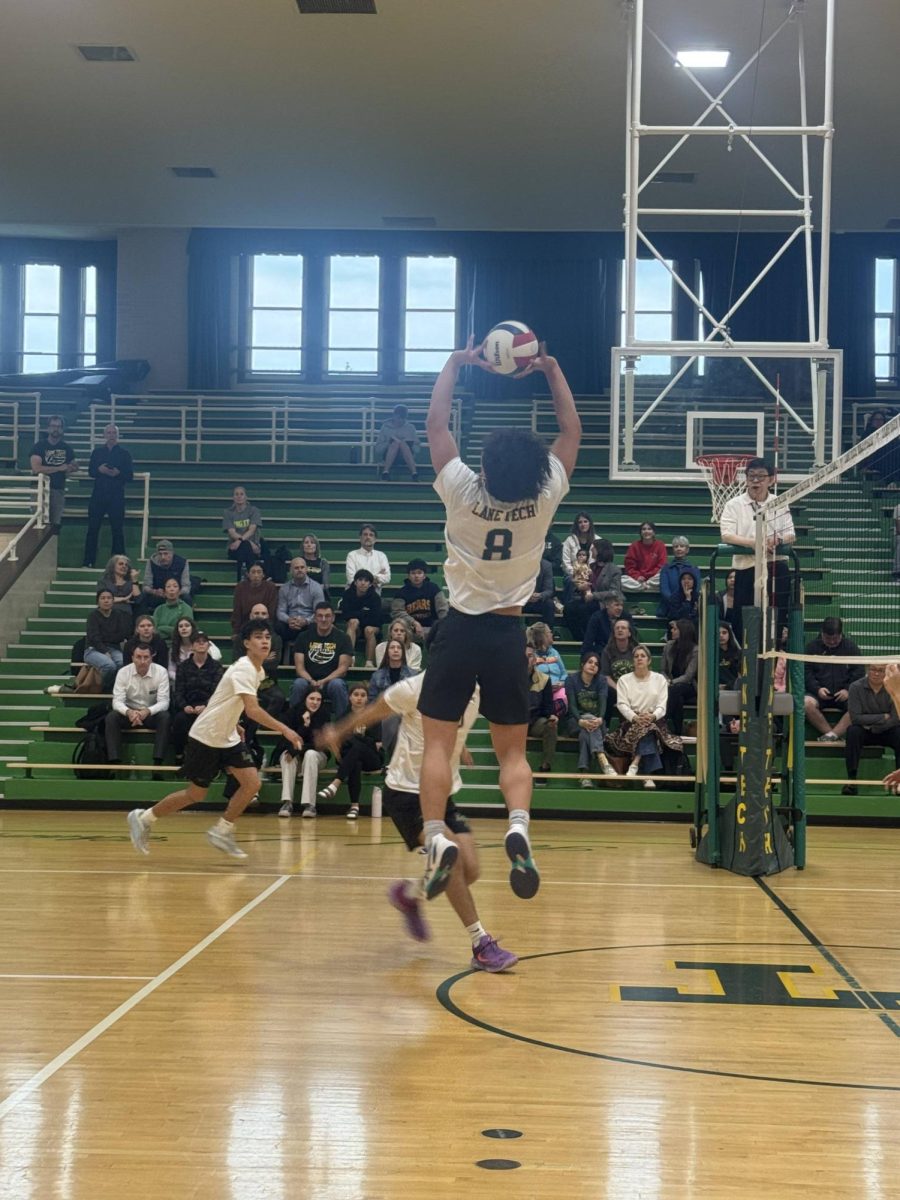
In the 30 athletic teams at Lane, filled with promising student athletes, several go on to continue with their sport during college.
It goes without saying that getting recruited to play a sport is immensely difficult. However, when the process is combined with the intense stress of studying, maintaining grades, ACT, and SAT testing, the additional concern for recruitment has a polarizing effect on whether athletes experience more or less stress.
When detailing why some student athletes with definite potential don’t go on to swim in college, Matthew O’Hagan, Lane Tech Boys Swim Team Coach, said “I think part of that is attributed to the fact that Lane is so rigorous academically, and then athletically, as well, that a lot of them just felt like they had done everything they needed to do.”
Senior Ronan Owens, a D1 Baseball recruit for UMass, noted he felt more tired after school due to practices: “But I just focused on developing and I think that helped me not to stress too much on the SAT and I knew I didn’t have to get as good of a score.”
Owens said he felt less pressure and a decrease in his stress level during the recruitment process.
“Yeah, definitely. I mean, I got a 1260, which definitely isn’t the highest score, but I think that that did it,” Owens said. “And I got into Georgetown with that. And I knew I wasn’t going to have to stress too much about it.”
Eleni Murray, a junior on the water polo team, said she felt as if there was both a relief and and an addition of stress: “[Water polo] definitely does [relieve stress], but sometimes it creates more stress since it’s a very hard process and also I have to be very good at my sport to have it to fall back on.”
Murray even acknowledged there was some distraction from SAT and ACT studying due to her sport. She said she experienced “a little bit [of distraction], because it’s kind of stressful, but I know that I still need the good grades to qualify for these schools.”
Similarly, O’Hagan noticed the part grades play in whether or not students continue on with their sport.
“Testing or grades in general is a big part of making sure that you get into the school you want to go to,” O’Hagan said. “If you are the fastest kid in the state and you want to go to Stanford, but you don’t have the grades to get into Stanford, well, then you’re not going there.”
Though grades themselves might alter the chances of athletes making it into a school the opposite can be true: making it into a more academically renowned school that might not have a sport an athlete is looking to play.
O’Hagan recalled a student from a few years back. “Yeah, he went to Yale, and he wasn’t fast enough to get on the team. He swam club for a couple of years, things like that. But I think it just ends up being they’re prioritizing their education first, which I wholeheartedly believe in, and then they do athletics as a little bit more like on the back burner type thing.”
Mila Maksimovic, a junior on the Lane Tech Girls Basketball team, said that if she were to be accepted into a school on merit rather than one she was recruited by she would attend the former.
“I feel like that’s something that I can go further with, rather than basketball, because, I mean, you can always transfer if you play for it, but I’d rather just know that I have something,” Maksimovic said.
This choice has been made previously by Jacob Galachinski, a swimmer, who chose not to continue swimming in college, according to O’Hagan. “ I don’t think they’re losing passion, like, Jacob Galachinski was, you know, a state qualifier, did really well, but he went to U of I, right? U of I doesn’t have a men’s swim program. He wanted to go there for engineering,” O’Hagan said. “A lot of them go to go to school first, so they go to a university, they want to go to U of I, they go to engineering, things like that, and then, you know, they either don’t have a swim team or they’re not fast enough [to be on the team for that school]”.