In 2020, COVID-19 spun the world into a full global shutdown, trapping us in our homes, but more importantly, tethering us all to our devices. This shift has caused almost a revolt backwards in recent years, pining for handmade craftsmanship, and doing things ourselves.
“A lot of our everyday experience is mitigated through digital respects,” said Kelly Novak, a metalsmithing teacher at Lane. “So the ability to work from idea to complete object existing in the world is something that a lot of people are craving.”
Her metalsmithing class takes place during 7th and 8th period, giving students an opportunity to step away from their devices.
Novak recalled that for her students especially, metalsmithing is a great way to unwind, and acts as a “a nice way to kind of close the computer, and fixate on what your hands can do, and also to have a sense of agency when it comes to power tools or crafting objects.”
Novak’s own work consists of a process called “hybridity of materials,” which layers different contexts as well as interpretations onto “more commonly used” objects, as Novak describes. Her personalized work, as well as art by hand tends to give her a lot of joy. “I love the media,” Novak said, referring to metal.
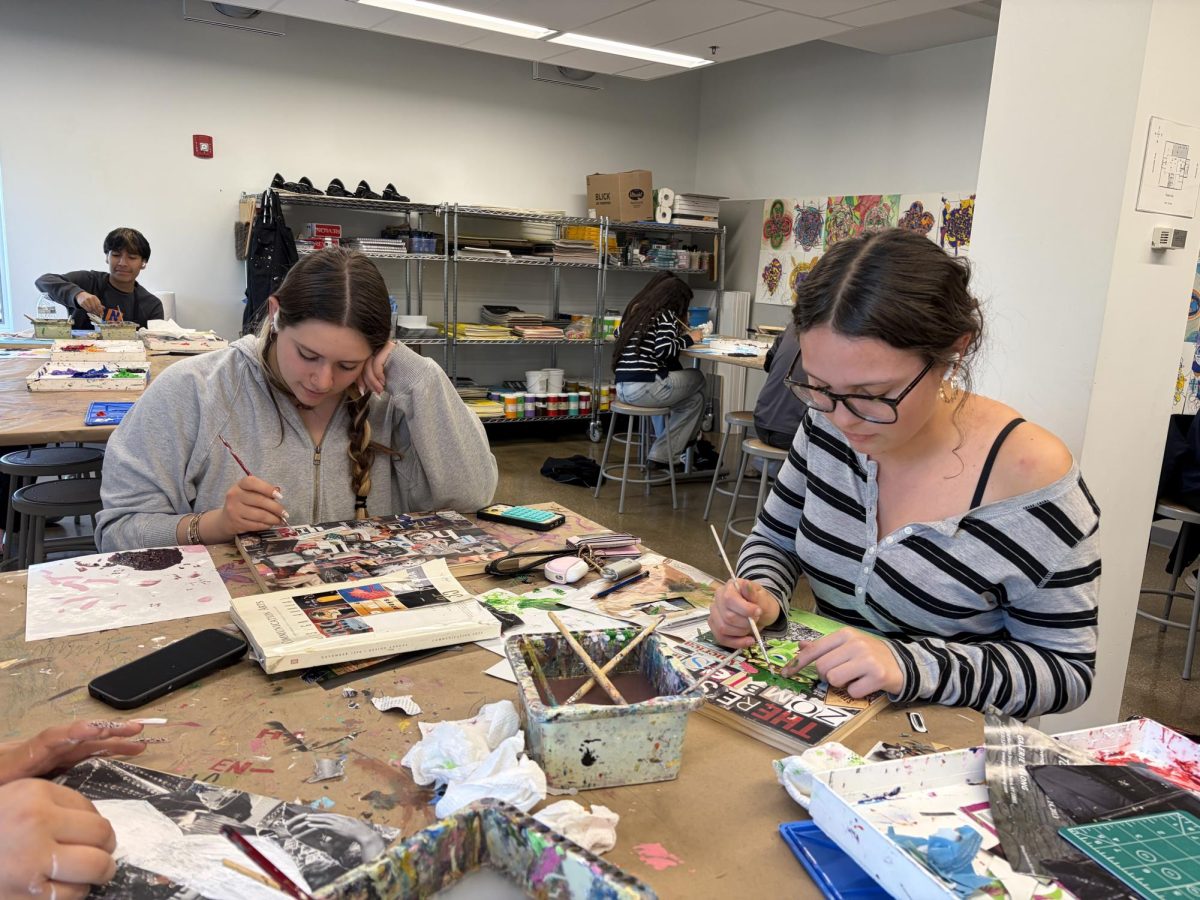
Personalization seems to play a large role in the rise of certain hand made hobbies as well. One student in Lane’s textile department, Denise Oggie, says that this increase is due to a rise in “individualism,” a recent trend defined by “personal style” , said Oggie. “Nowadays, I feel like people want to make things that scream, ‘them’,” she said.
Along with the textiles class, Oggie also crochets on her own time, making accessories, and things she “wants to have that [she] doesn’t really feel like buying.”
Another textiles student, Violet Rhodebush, agrees with this as well. “I just really like making things that look nice to me,” she said. Rhodebush joined Lane’s textile class in her junior year, and crochet club her freshman year. “Crochet is everywhere,” she said, noting the recent increase. “It’s really cool to see someone just pull out a project in the middle of class.”
Rhodebush said she’s really trying to learn more about making clothes in textiles. “My dream for high school is I want to make my prom dress for next year,” Rhodebush said. Environmental concerns also play a certain part in Rhodebush’s decision to create. “Human rights concerns, with fast fashion, and how we store our clothing are really important,” she said.
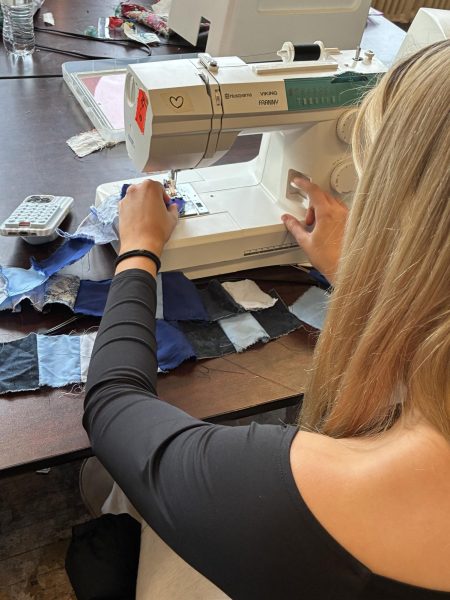
Rhodebush’s largest drive may be the most simple, as she stresses the production process of her hobbies the most. “Making things is part of what makes me enjoy finished products,” Rhodebush said.
She described embracing human error, something that goes hand in hand with the process. “Something I make by hand will have way more issues than a store bond garment,” Rhodebush said. “But I know that I made it. I made something happen, and I think that’s more valuable to me than the convenience of getting things from a store.”
Oggie pushes this thought further, saying, “If you’re not interested in the arts, I already sort of don’t trust you,” she said. “It says something about you as a person,” she said. “If you’re unwilling to spend time on something that isn’t already done,” she said.