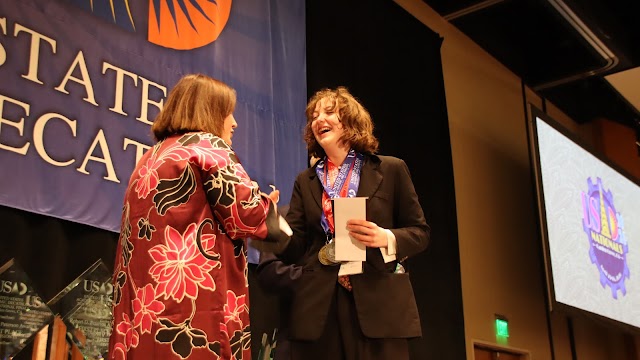
Now named valedictorian of the Class of 2026, Daijah Woods said at the moment it didn’t feel real. “I didn’t nd out until my friends [saw the email and] were texting me congratulations,” Woods said. “I was a little confused… It was very surreal.” What stood out more than the title though, was the support she felt from the people around her.
“Honestly… I would do it all over again.”
Reflecting on her four years at Lane, Daijah Woods didn’t start by talking about grades or rankings. Instead, she smiled and thought about the experience itself, the classes she took, the risks she decided to take, and the people who pushed her along the way. Just a spot behind her, Gus Silberg, salutatorian, shared a similar story.
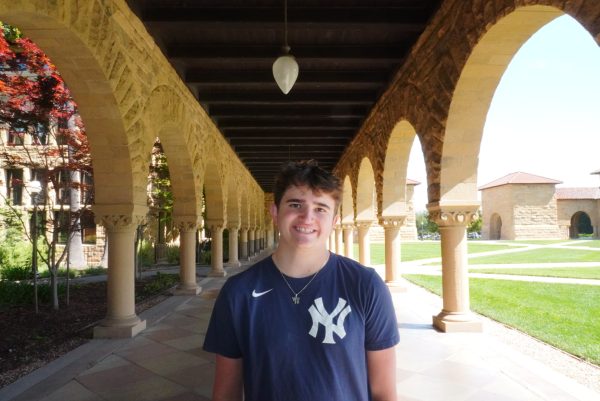
When he talks about his time at Lane, he doesn’t start with the accomplishments either, he started with the environment. “I just think about the community around me… It was so easy for me to find classes I was interested in,” said Silberg. “Everyone’s very encouraging… they’ll help you out along the way.”
For both Woods and Silberg, school became more meaningful when they found ways to connect it to themselves. Woods remembers one teacher that changed everything: Mrs. Cramarosso. “She just changed the way I wrote and the way I saw classes in general,” Woods said.
Silberg described a similar shift when he entered AP Capstone, and specifically shouted out Mr. Gonzalez. “He really pushed me to explore what I was interested in. [The class] really allowed me to think about what I wanted to learn and turn it into a big project,” Silberg said.
Their daily routines reflected two different mindsets. Silberg learned early on to protect his time outside of school. “I really maximized my 8:00 to 3:15,” Silberg said, explaining that staying focused during class meant he could fully relax later. Woods on the other hand found herself working whenever she could. “If I’m on the bus, I’d pull out my phone and do some work. ere’s just never a time where I’m sitting around feeling unproductive,” Woods said.
Neither path was without its challenges. Both students openly admitted that self-doubt followed them at times. “It’s pretty common to doubt yourself… There are so many smart people,” Silberg said. He learned to remind himself that “everyone’s on their own path.” Woods described similar feelings of imposter syndrome. When things became overwhelming, she gave herself space to reset “I need a moment to myself… then I’ll go back to my work.”
As graduation approaches, both students are thinking less about titles and more about what they’ll carry forward at Duke University (Woods) and Stanford University (Silberg). Silberg said being salutatorian is meaningful because it gives him the opportunity to “speak on behalf of this amazing class.” Woods hopes younger students take something simpler but just as important; “just because a class is advertised as being hard… you should still try and take it,” Woods said. “A grade isn’t everything, you are not your grade.”
Looking back, Silberg wishes he had gotten involved in more activities earlier on. “It’s such a huge school you’ve really got to take advantage of that,” Silberg said. Woods, though, wouldn’t change her experience.
After everything, the stress, the late nights, the moments of doubt, her answer still remains the same: She would do it all over again.