Hudson Finn can still remember his first Future Scientists of Lane club meeting,back at the beginning of his sophomore year.
”It started off pretty awkward, not gonna lie,” said Finn, a senior set to graduate in just a few weeks. “I knew a few people in the club already, but there were still a lot of people I didn’t know at all, you know, but we were all interested in science. So once we started with the club stuff, we got more comfortable with each other because we all were enjoying ourselves, you know, and then [we] got closer from there.”
Looking back on these experiences now, though, they seem less mundane and more valuable. They taught Finn some “pretty essential stuff,” as he puts it. “The first time I went to the club, it helped me develop those social skills of, you know, meeting new people, trying new things, [and] going out there and having a good mindset,” he said.
Finn said he also was able to engage with concepts he plans to focus on in college and his career later down the line. “Future Scientists of Lane Club was geared towards chemistry, and that’s what I want to do in the future,” Finn said. “So I went out there, I learned some useful skills. I developed experiments. I had fun with people and, yeah, it just really helped me towards what I want to do in the future.”
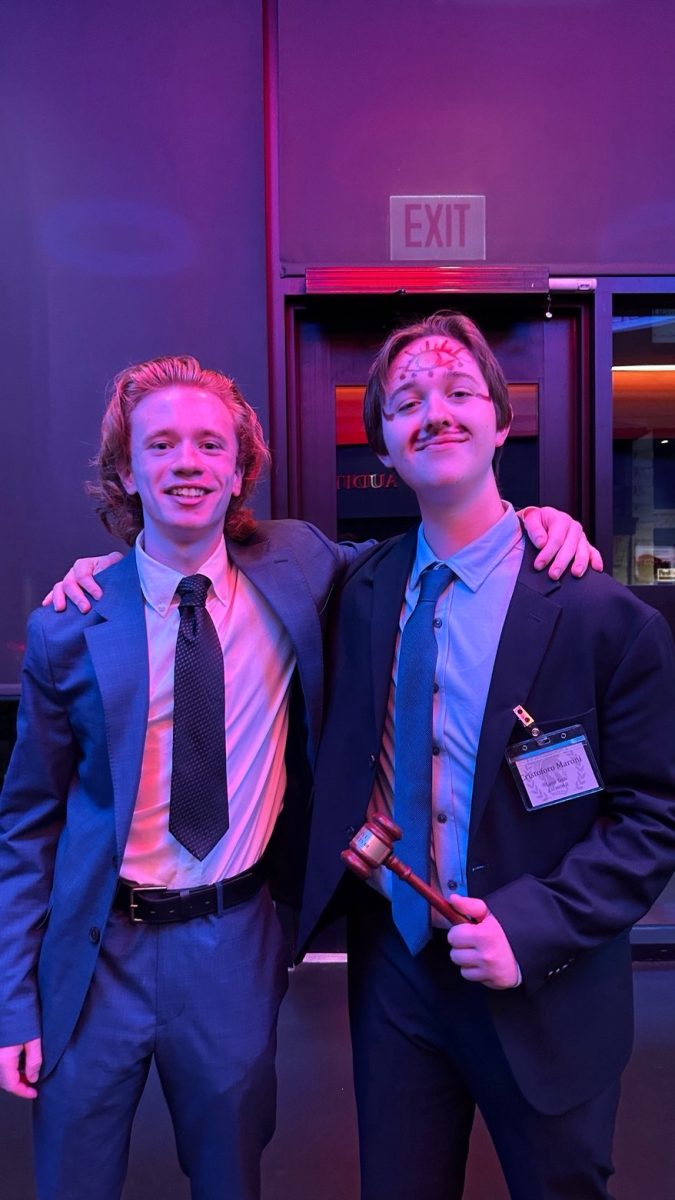
Jackson Kochowicz, in his fourth year as a part of Model UN, also built skills to use in the academic and professional world.
“[Model UN] helps you learn, actually talk to people, and not be nervous while doing it,” he said. “I mean, anytime you’re doing a presentation, you’re giving a speech, you’re doing any kind of group project…Model UN really gave me the skills I need to do that, for sure. Just holding a conversation with someone, even if you don’t hold the same ideas. It’s really given me a lot of crucial skills I can use going forward.”
Even participating in clubs that aren’t necessarily geared towards building skills for future exploits has proven to be enriching for many seniors, especially in terms of finding a community and being social. Lana Surgit, president of Korean Club and a member for all four of her years at Lane, described the experience as “amazing.”
“I feel like the club really grew with me,” Surgit said. “I came into the club, and it was like everyone was kind of socially dispersed, and I was very young. I was really shy, but as I grew with the club, and [there were] more communities of both Koreans and non-Koreans…people learned about the culture, [and] everyone came together…I feel like the club kind of blooms,” she said.
“[Korean Club] really taught me how to communicate and be around different types of people, and to [not] judge people, and to work with others, and to be more welcoming to new people who want to try new things,” Surgit said. “It’s taught me a lot.”