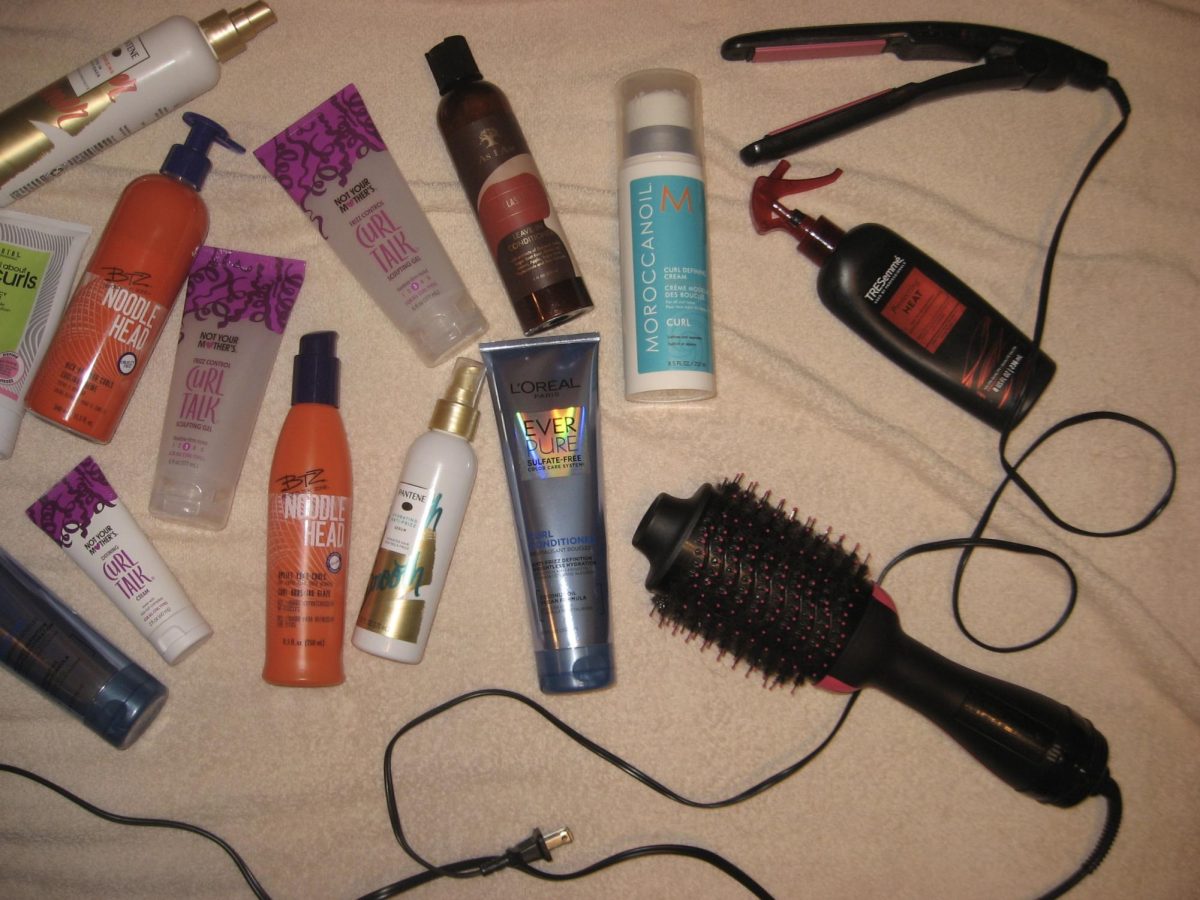
As nerdy, awkward Mia Thermopolis from “The Princess Diaries” finds out that she is not just a normal teenage girl but actually a princess, she undergoes a massive makeover. In this makeover, her glasses are removed and her messy, frizzy, unkept curls are tamed with a beautiful blowout.
As Mia removes her cap withholding her new look, her classmates gasp in astonishment at the sheer sight of beauty that is a girl with perfectly kept, conventional, straight hair.
But, why is this “clean” hair deemed as more beautiful than her natural curls?
Through centuries worth of racism, natural curls have been deemed as lesser than straight hair. As Africans were transported to America through the transatlantic slave trade, their natural curly hair became the standard of what was “unprofessional or dirty,” according to Curl Boutique, a specialized curly hair salon from Maine.
However, into the 1960s-70s in unison with the Black power freedom movements, wearing natural hair became more popularized as it was a sign of power and was associated with the Civil Rights Act of 1964.
This era was unfortunately short lived into the 1980s with the new popularization of the “Jheri curl.” Jheri curl is a chemical treatment that many Black people did at the time to loosen their natural curls into a more conventional, wavy pattern and was famously worn by Michael Jackson and Lionel Richie.
This once again was a short lived era as in the 2000s, a resurgence of the Natural Hair Movement was widely spread along social media. The movement was centered around Black people who wore their afro-textured hair in its natural coiled and curly state as well as in styles such as hair twists, braids, or dreadlocks.
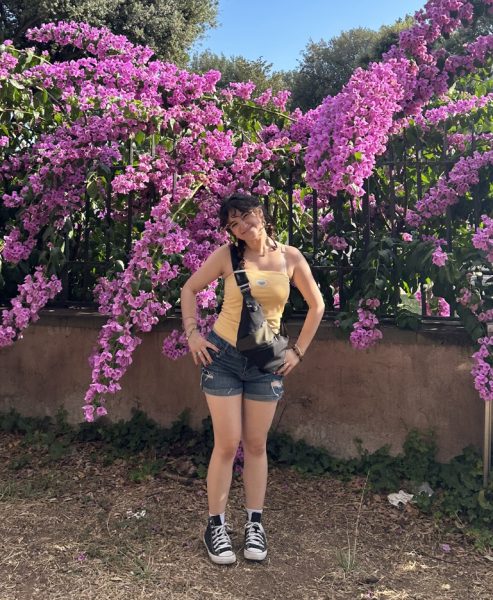
One Lane student who wears her hair natural is senior Addy Biggs. “It took me a while to get there, but I do like my hair,” Biggs said. “I had a hard time liking it because it was just so hard to manage, and it still is really hard to manage, but I figured out how to make it work.”
Despite the struggles women face with wearing their hair naturally, senior Novella Cage finds curly hair to be worth the hassle. “I feel so beautiful with curly hair. I feel like I can do so much cool stuff with it,” Cage said. “People always compliment me and I’m always so happy because I think it’s cool too, and I’m glad other people appreciate it.”
To Cage, her curly hair isn’t merely something beautiful on the outside as it also shares the history of her family. “My mom is half black and my dad is a quarter Jewish and a quarter Greek, and so both of my parents and two of my grandparents have curly hair, and I think having curly hair is really cool because it’s a part of our history,” Cage said. “I’m very proud of my curly hair.”
While these students have been able to feel beautiful and content with their curls, many women in the workplace face struggles regarding their hair and being perceived as professional.
This hotly contested idea of one wearing their natural hair and whether or not it is professional leads into another question: what does it mean to be “professional?”
While Merriam Webster defines it as “exhibiting a courteous, conscientious, and generally businesslike manner in the workplace,” I looked further into the stigmas placed upon women to wear their hair a certain way in the workplace.
According to a study conducted by Harvard Business Review, “More than half of the Black women surveyed felt like they had to wear their hair straight in a job interview to be successful. Two-thirds reported that they had changed their hair for a job interview.”
Similarly, senior Angel Otis said she received pushback for having curly hair when she was younger. “I was always told that my hair was ‘nappy’ and stuff like that, so it kind of made me ashamed,” Otis said.
The term “nappy” once again connects back to European enslavement of African Americans with the term deriving from the word “nap,” the fuzzy material that forms at the top of fabric. This term began being used derogatorily to refer to the hair of Black people as frizzy or unkempt similar to that of the fuzzy fabric, said NPR.
This pushback upon curly hair has also led to women feeling as if they are perceived as less than with their natural hair. “I do like [my hair] straight because I feel like I fit in more,” said junior Kashish Kranthi, “and it’s less of a hassle to deal with. I feel more confident and put together when I have it straightened.”
In terms of feeling beautiful, Kranthi also shared the struggles she has faced. “[Curly hair] makes me feel beautiful on occasion,” Kranthi said. “I’ve gotten so used to straightening it, that now I can only see myself with straight hair. It’s like I only feel pretty when I have my hair straight.”
Despite the constant pushback upon young women with curly hair for decades on end, especially Black women, the hair you are born with is always a part of you. Whether one decides to wear their hair natural or otherwise, it should be a choice of their own and not based upon societal pressures.